
Trip Hazards and Liability: The Parking Lot Defects Your Insurer Cares About
For commercial property owners, a parking lot is more than a place for customers and employees to park. It is part of your property’s safety infrastructure—and when pavement defects create a trip hazard, the consequences can extend well beyond a repair bill.
At Maryland Asphalt, we help commercial property owners understand the importance of addressing pavement problems before they become larger safety and maintenance concerns. Here are the parking lot defects worth watching—and the steps that can help protect your property.
Vertical Displacement: When Small Height Differences Become Big Problems
One of the most important pavement conditions to monitor is vertical displacement, which occurs when two adjacent surfaces sit at different heights. The difference might develop between asphalt patches, along a concrete sidewalk, at a utility cover, or where pavement meets a curb.
Common causes include:
-
- Asphalt settling because of inadequate support beneath the pavement.
-
- Tree roots pushing up pavement or adjacent walkways.
-
- Freeze-thaw cycles contributing to cracking, movement, and deterioration.
-
- Poorly executed patches that leave uneven joints.
-
- Water infiltration weakening the base and causing localized settlement.
-
- Repeated vehicle loading that accelerates pavement movement.
Four Parking Lot Failure Points That Deserve Attention
Not every pavement defect creates the same level of risk. Certain features deserve particular attention because they interrupt walking surfaces, deteriorate under repeated use, or are difficult for pedestrians to notice.
Wheel Stops and Parking Blocks
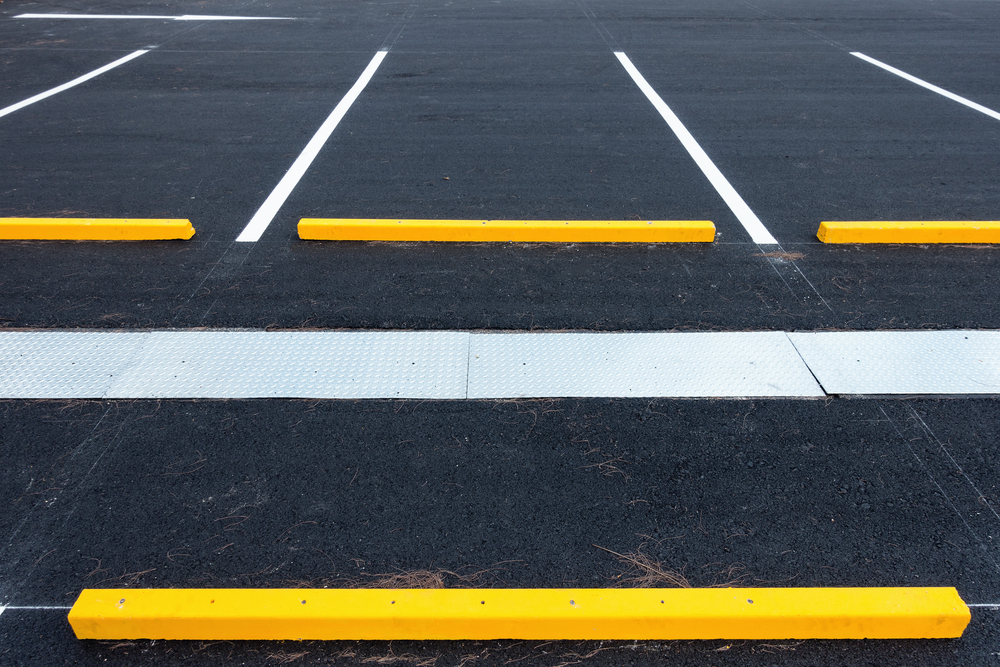
Wheel stops help keep vehicles within designated parking spaces, but damaged, displaced, or poorly positioned stops can create unexpected obstacles.
A cracked wheel stop may have sharp or irregular edges. A loose stop can shift into a pedestrian’s path. A wheel stop placed across a natural walking route may create a trip hazard, particularly when visibility is poor or pedestrians are carrying bags, pushing carts, or watching nearby traffic.
Curb Transitions and Uneven Pavement Edges
Curbs, sidewalks, drive lanes, and parking areas meet at numerous transitions. When these connections deteriorate, they can create abrupt changes in elevation or irregular walking surfaces.
Common warning signs include crumbling curb edges, settled asphalt next to concrete, broken pavement at driveway entrances, and patches that leave a raised lip.
Utility Lids and Manhole Covers
Utility covers are common throughout commercial parking lots, but their surrounding pavement can deteriorate as the lot ages.
When asphalt settles around a utility lid, the cover may sit above or below the surrounding surface. Broken pavement can create a rough perimeter, while loose or unstable covers may introduce additional hazards.
Drain Grates and Drainage Structures
Drainage problems can create a double liability concern: they may contribute to unsafe walking conditions while also accelerating pavement deterioration.
A damaged, displaced, or improperly seated drain grate can create an opening, an uneven edge, or an unstable surface. Deteriorating asphalt around a catch basin may leave pedestrians navigating broken pavement just where water collects.
Standing water can also conceal cracks, depressions, and changes in elevation. During colder weather, drainage problems may contribute to icy conditions.
Temporary vs. Permanent Repairs: Knowing the Difference
Understanding the difference between temporary mitigation and permanent correction helps property owners avoid a common mistake: treating a visible warning or quick patch as proof that the underlying problem has been resolved.
If water continues entering the pavement structure, for example, a surface patch may deteriorate again. If a utility frame has settled, filling the surrounding asphalt without addressing the frame may leave the elevation difference unresolved.
At Maryland Asphalt, we select a repair that fits the problem and reduces the likelihood of the defect returning.
What Commercial Property Owners Should Do Before a Claim Happens
A proactive maintenance plan does not guarantee that a property will avoid every injury or insurance claim. It can, however, help identify preventable hazards earlier and create a more reliable process for responding to them.
Commercial property owners and managers can strengthen their approach by taking five practical steps:
- Establish a documented inspection schedule. Set a frequency appropriate for the property’s use, traffic, and pavement condition.
- Prioritize pedestrian exposure. Give prompt attention to defects near entrances, accessible parking, walkways, crossings, and other high-traffic areas.
- Keep a repair history. Record recurring problems, completed work, contractor recommendations, and follow-up inspections.
- Respond promptly to reported hazards. Restrict access or use other suitable interim controls while arranging an appropriate correction.
- Review insurance and maintenance obligations. Understand applicable policy requirements, lease responsibilities, accessibility obligations, and any contractual inspection or reporting procedures.
Protect Your Property With Proactive Asphalt Maintenance
Maryland Asphalt works with commercial property owners to identify pavement problems and recommend practical maintenance and repair solutions. Whether your property needs localized asphalt repairs, attention to uneven transitions, or a broader pavement assessment, addressing defects early can help you make informed maintenance decisions and reduce preventable risks.
Don’t wait for a trip-and-fall incident to put your parking lot under scrutiny.
Call Maryland Asphalt at (240) 745-2344 to discuss your commercial property’s pavement condition and take the next step toward a safer, better-maintained parking lot.
Categorised in: Asphalt Repair, Commercial Asphalt Services